Fly Lady for Families with Children of Different Ages
The Fly Lady method helps families with multiple children share household responsibilities without stress or conflict. Instead of fighting chaos alone, involve each child according to age—through play for toddlers, personal zones for schoolers, and respectful agreements with teenagers.
Order Without Stress — It's Possible
In a family with multiple children, chaos seems like the natural state of things: the toddler spills cereal, the preschooler builds a pillow fort, the schoolchild leaves their backpack in the middle of the hallway, and the teenager insists their room is sovereign territory. You rush between them all, picking up, wiping, folding — and by evening you feel drained, while the house looks like it hasn't been cleaned in a week.
The Fly Lady method suggests you stop fighting chaos alone and start taking into account what each family member can do. The main principle: household chores shouldn't turn into a battleground. The goal isn't perfect cleanliness, but for everyone to learn to care for the space and feel like part of a team — without yelling, guilt, or tears.
The Littlest Ones: Play Instead of Demands
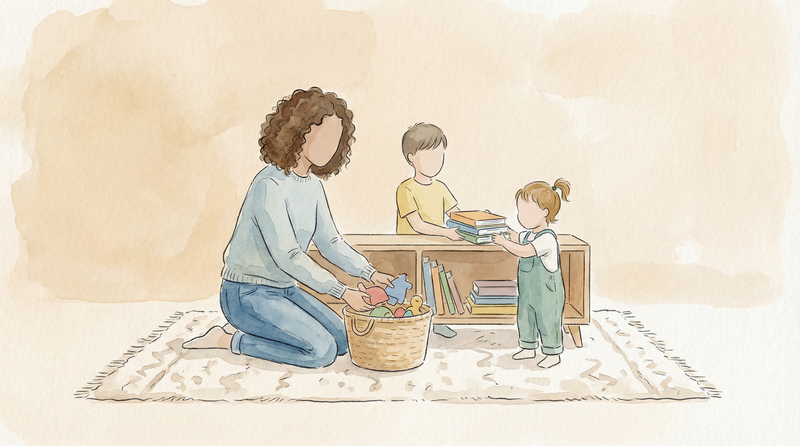
Toddlers under three don't understand the word "cleanup," but they can participate in simple rituals if you turn them into a game. "The stuffed bunnies want to sleep — put them in the basket," "Let's drive the cars to the garage" — phrases like these work better than a stern "clean up your toys."
Establish short evening rituals: before bed we gather toys, after dinner we bring our plate to the counter by the sink. Don't expect perfection — the habit itself matters, not the result. In the LadyFly app, you can set reminders for such family rituals so you don't forget them in the whirlwind of the day.
Preschoolers and Elementary Schoolers: Their Own Zone of Responsibility
Children from four to ten are ready to take on small responsibilities. Fly Lady suggests dividing the house into zones and giving each one special attention once a week. In the same way, give your child their own personal zone — a desk, a bookshelf, a coat hook in the entryway.
Create a visual morning checklist together: wash up, make the bed, get dressed, eat breakfast. Hang it at the child's eye level, with pictures or stickers if you like. Simple lists like these give children a sense of control over their day, and give you the freedom from repeating the same things endlessly.
And the hardest part for perfectionist moms: don't redo it after them! A crookedly made bed is still their achievement. Praise the effort, not the perfect result, or else the child will decide there's no point in trying.
Teenagers: Agreement Instead of Orders
With teenagers aged eleven to seventeen, you need a completely different approach. They're capable of serious help, but they can't stand being treated like little kids. Sit down and discuss as equals what household tasks they're willing to take on. Someone will happily make pasta for dinner, someone will walk the dog, and someone will handle taking out the trash.
Fly Lady teaches the "15 minutes a day" rule — and it works wonderfully with teenagers. Suggest they choose their own time for tidying their room. Not an hour-long deep clean, but just fifteen minutes daily. Respect your teenager's personal space and don't conduct surprise inspections — trust builds responsibility far more effectively than control.
When There Are Multiple Children in the Family: Flexibility and System
The main mistake is demanding the same from everyone. A three-year-old can't do what an eight-year-old does, and that's completely normal. Each one contributes according to their abilities, and that's already valuable.
Introduce family rituals: a five-minute tidy-up before dinner, when everyone quickly clears their things from common areas. Or a morning routine where each person is responsible for their zone — so the house doesn't turn into a disaster by lunchtime. The LadyFly app helps organize schedules so household tasks don't feel endless and don't eat up all your time.
When you have a system, there's room for what matters most — being a mom who doesn't burn out from exhaustion, but enjoys moments with her children. Order shouldn't be a punishment — not for you, and not for them.