Family Responsibilities with Fly Lady: A Gentle Approach to Sharing Tasks

Sharing household responsibilities builds teamwork, not control. Start conversations calmly by expressing needs, divide zones instead of tasks, and involve children early through simple routines. Positive reinforcement and patience help families adjust to shared care of the home.
Why Sharing Responsibilities Isn't About Control
Many women take on all the housework because they're afraid of seeming demanding or confrontational. But the Fly Lady method teaches a different approach: a family is a team where everyone contributes according to their abilities.
It's important to understand that dividing tasks isn't about forcing everyone to work. It's about creating an atmosphere where each family member feels connected to the shared comfort of home. When your husband or children help not because they're forced to, but because it's a natural part of life, everything changes.
How to Start the Conversation Without Accusations
The hardest part is getting started. Instead of blaming ("You never help!"), try talking about your feelings and needs. For example: "I get tired when I do everything alone. I need your support."
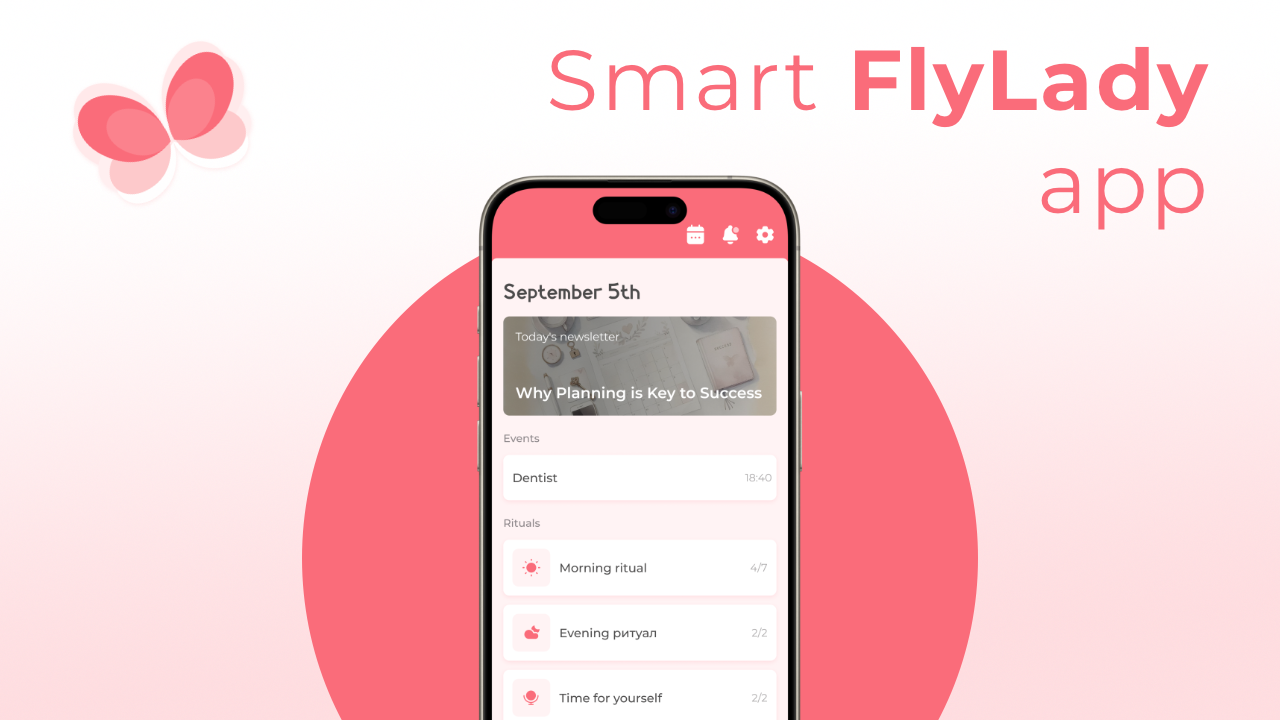
The LadyFly app helps visualize all household tasks—show your partner the to-do list so they can see the real volume of work. Often men simply don't realize how much needs to be done daily. When the picture becomes clear, understanding and willingness to help emerge.
Avoid conversations when tensions are high or when you're exhausted. Choose a calm moment when you're both in a good mood, and suggest finding a solution together.
Examples of Gentle Task Sharing for Couples
Fly Lady suggests dividing zones of responsibility rather than specific tasks. This removes the feeling of total control and gives everyone freedom of action:
- Kitchen after dinner — one person cooks, the other washes dishes and wipes down surfaces
- Morning and evening routines — each person handles their own but helps the children
- Weekly cleaning — one takes the bathroom and toilet, the other vacuums and dusts
- Laundry — one washes and hangs, the other folds and puts away
The key is to agree once and not constantly remind.
How to Involve Children Without Struggle
Children can participate in household chores from an early age, and this isn't punishment—it's teaching independence. Start small and turn it into a game or pleasant tradition.
For toddlers aged 3-5, simple tasks work well:
- Put toys in a basket before bedtime
- Put dirty clothes in the laundry basket
- Dust low surfaces with a special cloth
School-age children can do more:
- Make their bed every morning
- Feed pets
- Help set the table and clear dishes
- Keep their room tidy
Teenagers are already capable of taking on full zones of responsibility—for example, cooking dinner for the whole family once a week or being completely responsible for keeping their room clean.
Don't demand perfect execution. If your child makes the bed crookedly—praise the effort. The Fly Lady method reminds us: progress matters more than perfectionism.
What to Do If Your Family Resists
Change always meets resistance, especially if you used to do everything yourself. Give your loved ones time to adjust. Don't do for them what you've agreed upon—even if you really want to.
Use positive reinforcement: thank them for helping, acknowledge even small successes. When your husband takes out the trash without being reminded—say thank you. When your daughter cleans her room—point out how pleasant it is to be there.
LadyFly will become your ally in this process: the reminder system takes away your role as "supervisor," and your family learns independence. Gradually, the home will stop being only your responsibility and become a shared space that everyone cares for.